










-
-
- R&D Unit
- Industrial Vaccine Production Unit
- Vaccine and Immunization Training Unit
- Vaccine Epidemiology Unit
- Preclinical and Clinical Research and Project Coordination Unit
- Epidemiology of Pandemic-Risk Infectious Agents Unit
- Bioterrorism Unit
- Laboratory Animal Production/Testing and Preclinical Research Unit
- Tissue Culture Collection, Viral and Bacterial Culture Banking Unit
- Quality Control Laboratory Unit
- Training, Administrative, and Financial Services Unit
-
-
-
- Announcements
- Key Dates
- FAQ
- Contact
Last Added News
- Will There Be a New Pandemic?
- The article titled Portraits from Our Medical History: Dr. Tevfik Salim Sağlam has been published.
- The article titled Questions on Immunization and Vaccination and Short Answers has been published.
- Diphtheria Epidemiology in Türkiye Throughout History Has Been Published
- Portraits from Our Medical History: Dr. Elhan Özlüarda (1927-2013) Has Been Published
- ALL NEWS
September 28th World Rabies Day
Every September 28th has been celebrated as “World Rabies Day” by World Health Organization (WHO) and World Organization for Animal Health (OIE) for 16 years in order to raise awareness on prevention of rabies and to draw attention to the developments on control of this disease. September 28th is also marked as the anniversary of death of Louis Pasteur, French chemist and microbiologist developing the first rabies vaccine.
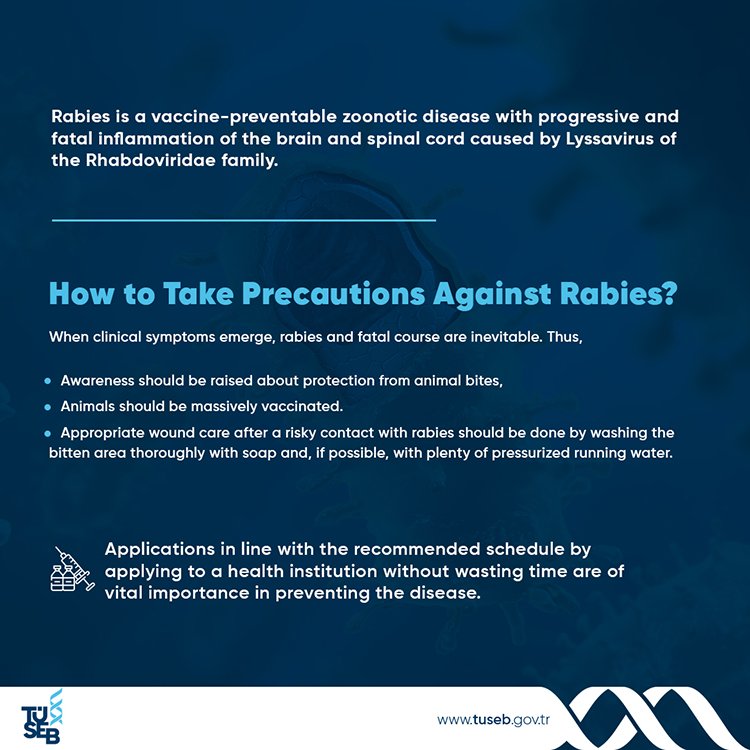
Rabies is a vaccine-preventable zoonotic disease with progressive and fatal inflammation of the brain and spinal cord caused by Lyssavirus of the Rhabdoviridae family. All warm-blooded animals can be infected with the rabies virus, but in many parts of the world, especially in developing countries, almost all cases of rabies occur through the bite of an infected dog.
Rabies, one of the oldest diseases in the world dating back to Mesopotamia, is estimated to cause the death of at least 59 thousand people in 150 countries every year. The large numbers of death cases are reported from Africa and Asia. It is known that almost half of these cases, especially in rural areas, are children under the age of 15.
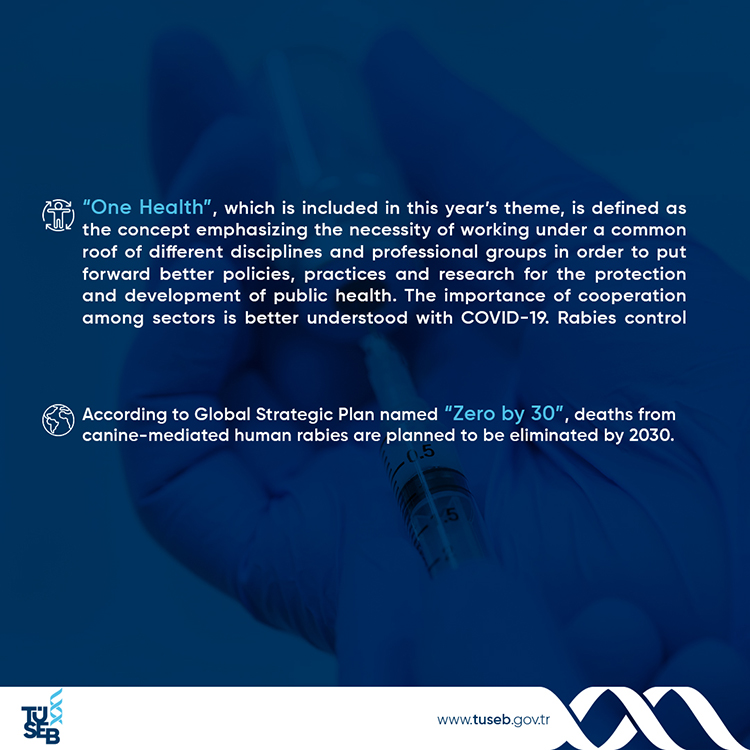
The theme of this year is determined as “Rabies: One health, zero death” to highlight the connection of the environment with humans and animals. “One Health” is defined as the concept emphasizing the necessity of working under a common roof of different disciplines and professional groups in order to put forward better policies, practices and research for the protection and development of public health. COVID-19 pandemic not only demonstrates how fragile health systems can be but also reveals the importance of cooperation among sectors. Rabies control programmes are such good examples for One Health application in this respect. According to Global Strategic Plan named “Zero by 30”, deaths from canine-mediated human rabies are planned to be eliminated by 2030.
When clinical symptoms emerge, rabies and fatal course are inevitable. Thus, it is essential to prevent the disease by raising awareness on protection from animal (especially dog) bites, mass vaccination of animals (especially dogs), appropriate wound care after a risky contact with rabies (washing the bitten area thoroughly with soap and if possible with plenty of pressurized running water), vaccination, and if necessary, other vaccines (tetanus vaccine), drug (immune globin, antibiotic etc) applications in line with the recommended schedule by applying to a health institution without wasting time are of vital importance in preventing the disease.
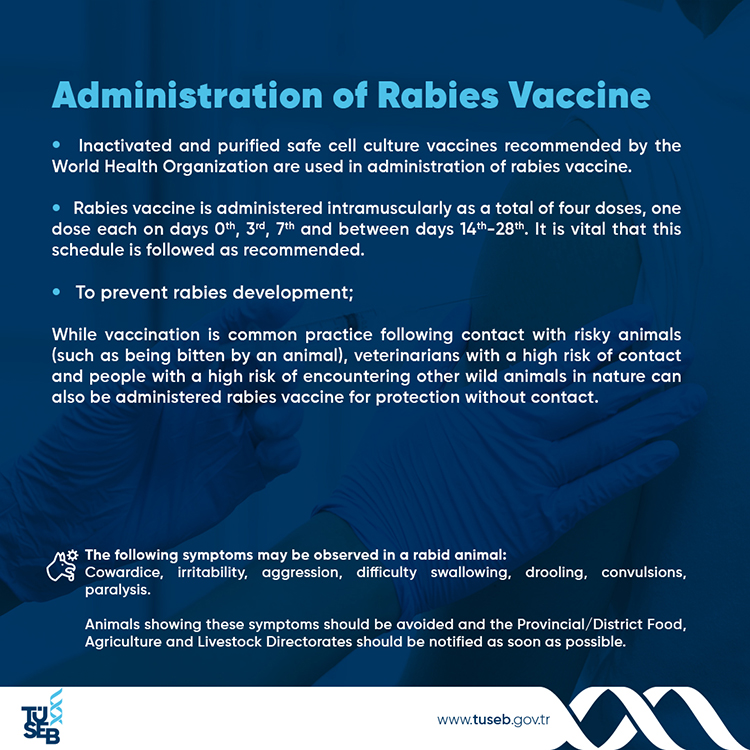
Inactivated and purified safe cell culture vaccines recommended by the World Health Organization are used in administration of rabies vaccine. Rabies vaccine is administered intramuscularly as a total of four doses, one dose each on days 0th, 3rd, 7th and between days 14th-28th. It is vital that this schedule is followed as recommended. While vaccination is common practice following contact with risky animals (such as being bitten by an animal) to prevent rabies development, veterinarians with a high risk of contact and people with a high risk of encountering other wild animals in nature can also be administered rabies vaccine for protection without contact.
The following symptoms may be observed in a rabid animal: cowardice, irritability, aggression, difficulty swallowing, drooling, convulsions, paralysis. Animals showing these symptoms should be avoided and the Provincial/District Food, Agriculture and Livestock Directorates should be notified as soon as possible.
For more detailed information, you can refer to the Rabies Prophylaxis Guide* prepared by the Ministry of Health, General Directorate of Public Health.
*https://files.tuseb.gov.tr/tae/files/haberler/kuduz-profilaksi-rehberi.pdf